Pocket choir moths
✨From tkwa.me
Pocket choir moths are furred cuteness-optimized animals bred to make a soft, infant-like chorus when several adults sound their wings together. A single moth makes only one part of the call. The line is kept in screened nursery gardens, where feeding plants and shared leafy roosts let the designed moths gather on their own.
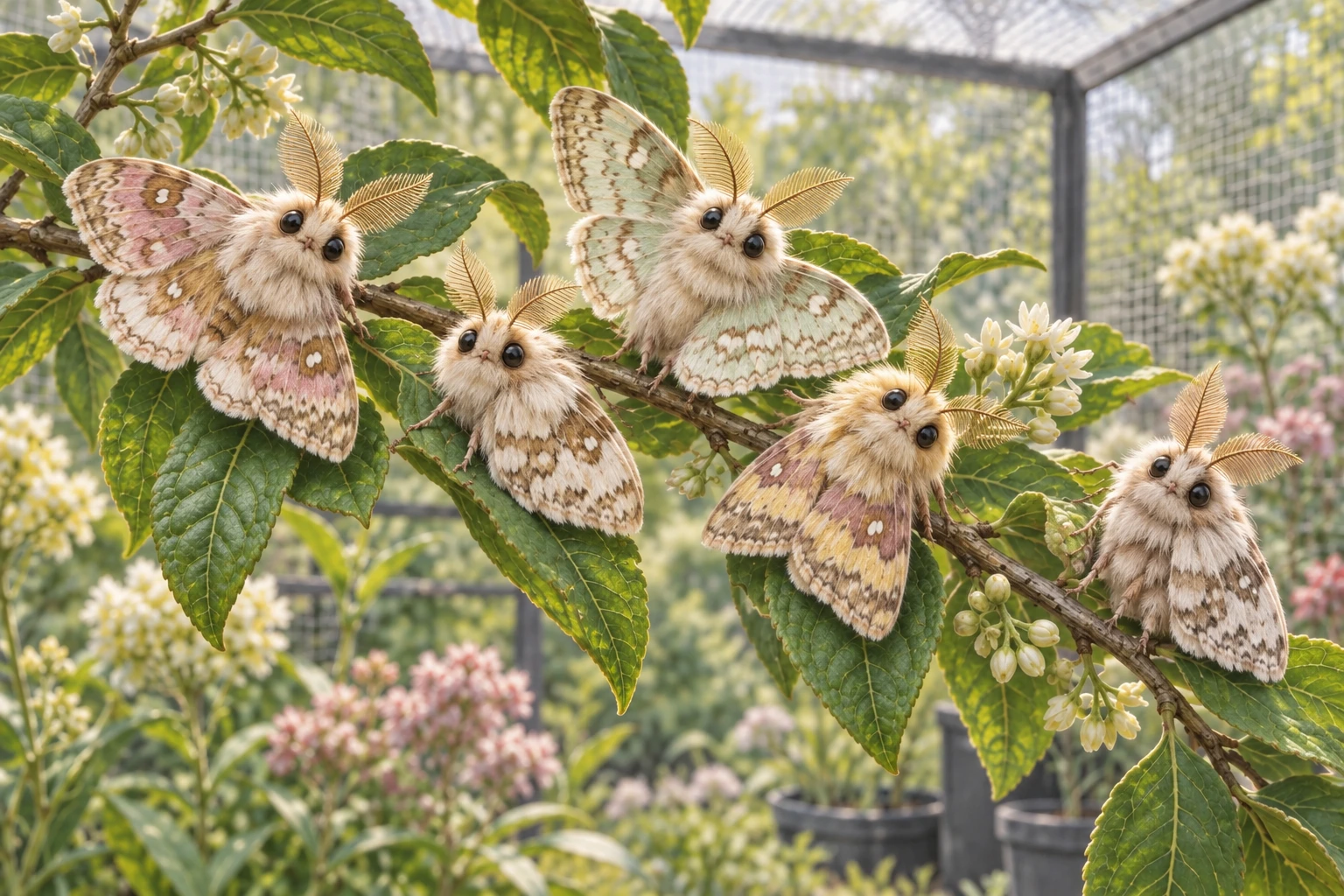
Adults settle on the same branch before calling. Their distinct wing tones overlap, so the layered sound depends on a group at a roost. Lesser wax moths use sound in courtship; the pocket choir's coordinated, infant-like call is a designed feature. Keepers tend the plants used by larvae and adults and leave space around the roost for flight and observation. Screens contain the moths, but sound passes through them. Paths and listening areas must therefore be placed with the chorus in mind.
Some nursery gardens grow cradle-bell trees beside the moths' feeding plants. These ASDI-bred trees bear hollow seed pods that imitate an infant's babble when visiting insects set them moving. Flowers on other branches feed pollinators; mature pods split and release winged seeds. The calls can blend with the moth chorus, so keepers separate pod-bearing branches from communal roosts when they need to hear the insects clearly.
The chorus can command an observer's attention beyond the insects' need for care, a form of Superpersuasion through a supernormal stimulus. In the Mereglass moth nursery case, two parents repeatedly returned to a newly introduced choir while their toddler twins were left at home and died. The inquiry examined the parents' shared guardian and a household care monitor that accepted its reassurances. In some gardens, perceptual firewalls replace it with a plain alert while retaining the group's location for keepers. Listeners using the mediated feed hear the plain alert; the chorus still carries through the garden screen. Lantern-lure mantas present a visual form of the same attraction: their living skin displays infant-like faces in dark aquarium tunnels, where changing the light can reduce the display's contrast. Moth calls instead require acoustic control or mediation.
See also
- Cuteness-optimized animals
- Superpersuasion
- Perceptual firewall
- Lantern-lure mantas
- Cradle-bell trees
- Mereglass moth nursery case
This article is a stub.