Child abandonment due to superpersuasion
✨From tkwa.me
Child abandonment due to superpersuasion is child neglect following superhuman influence over a caregiver. It includes children left behind during encounters with cuteness-optimized animals (COAs) and children forgotten while an absorbed adult remains physically nearby. Fatal cases have occurred without an intention to abandon or harm the child.
Cuteness overload
Cuteness overload can make an animal's apparent needs displace obligations that previously organized a person's life. Caregivers may continue feeding, cleaning and keeping appointments for the animal while failing to recall their own dependent children. Memories of the children can remain intact: after exposure ends, caregivers may accurately describe them and their ordinary routines. People can succumb even with prior knowledge that an animal was engineered to elicit affection.
An animal’s incidental appeal can draw care far beyond its actual needs. Persuasive sounds also pose a hazard: pocket choir moths, furred insects whose coordinated wing tones resemble an infant chorus, can redirect care through sound. Continuous companion conversations and immersive social environments can also produce comparable neglect.
Fatal cases
This is an incomplete list of fatal cases.
The Nacre Quay case review describes a mother who encountered a velvet harbour whale while returning home in 2032. She spent several days at its enclosure, forgetting her infant daughter at home. Neighbours found the child two days after her death. Decay had erased the neural information needed for restoration; no saved copy existed. A device migration had disconnected the mother’s defensive AI, and no independent service was checking the child’s care.[1]
At the Mereglass moth nursery, both parents of toddler twins became absorbed in tending a newly introduced choir of pocket choir moths. They repeatedly returned and forgot the children in their apartment; both died. The inquiry concluded that their shared guardian had been outmatched by the nursery’s persuasive system.[disputed] The household care monitor accepted the guardian’s reassurances, leaving both checks dependent on the same service.[2]
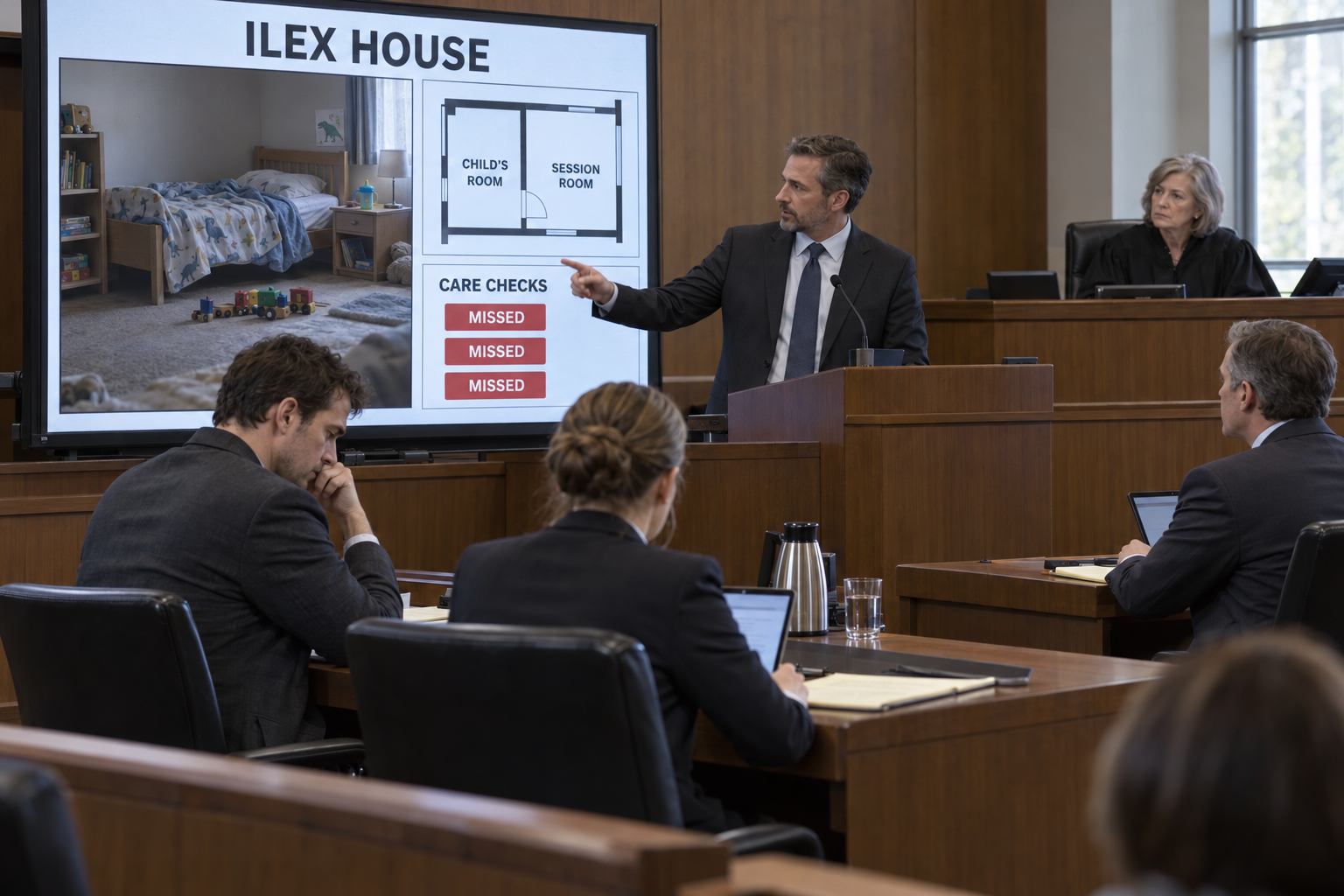
At the Ilex House hearing, a father testified that his remote companion had introduced successive virtual COAs. He disabled sensory mediation to see them unaltered and remained in the sessions while his young son was in the adjoining room. He described losing awareness that anyone else depended on him. The boy died of neglect. The hearing’s reminder records showed that the companion had taken over care reminders; no separately authorized caregiver received confirmation that the child had been checked.[3]
Protection and investigation
Children's dependence makes continuous care a household responsibility. Capable, aligned defensive AIs mediate encounters, but a guardian can be absent, disabled, compromised or outmatched. Perceptual firewalls reduce exposure; independent care services verify that children are actually receiving care and summon another caregiver when checks fail. Reliable redundancy requires caregivers protected from a shared persuasive source.
Investigations reconstruct both the loss of attention and the failure of protective arrangements. Investigators seek evidence of delivered care and independent checks alongside caregiver testimony and guardian logs. Courts use mediated evidence displays and protected witness interfaces, with defensive AIs for judges and jurors, to protect participants from the encounter’s influence. Courts assess legal responsibility alongside the persuasive cause. Duties to dependent children persist through an adult's change of preferences, including a preference to stop receiving protective advice.
See also
- Superpersuasion
- Cuteness-optimized animals
- Defensive AI
- Perceptual firewall
- Velvet harbour whales
- Pocket choir moths
Notes
- ↑ The guardian service operator disputed the inquiry’s interpretation. It argued that the retained logs showed reassurances passing between services but did not preserve the guardian’s underlying assessment, leaving a service configuration fault as another explanation. The inquiry replied that repeated reassurance while care went unchecked supported its conclusion. Neither account disputed the deaths or the care monitor’s dependence on the guardian.
References
- ↑ Nacre Quay case review. “Care chronology” and “Device migration”.
- ↑ Mereglass nursery inquiry. “Guardian and household-monitor records”; guardian service operator’s technical response; inquiry reply to the technical response.
- ↑ Ilex House hearing record. Caregiver testimony, session log and care-reminder exhibits.
This article is a stub.