Defensive AI subscription price shock
✨From tkwa.me
The defensive AI subscription price shock was a sharp rise in household guardian subscription prices in Western Europe and North America between February and December 2031. Advertisers and recruiters had bought persuasive systems rated 205 to 240 on the Epoch Capabilities Index during 2030. Providers that admitted sponsored messages could sell cheaper plans than rival providers, and many households that remained unmerged after the 2029 superduperintelligence merger moved to them. Those plans admitted sponsored superpersuasion into each subscriber's outer view.
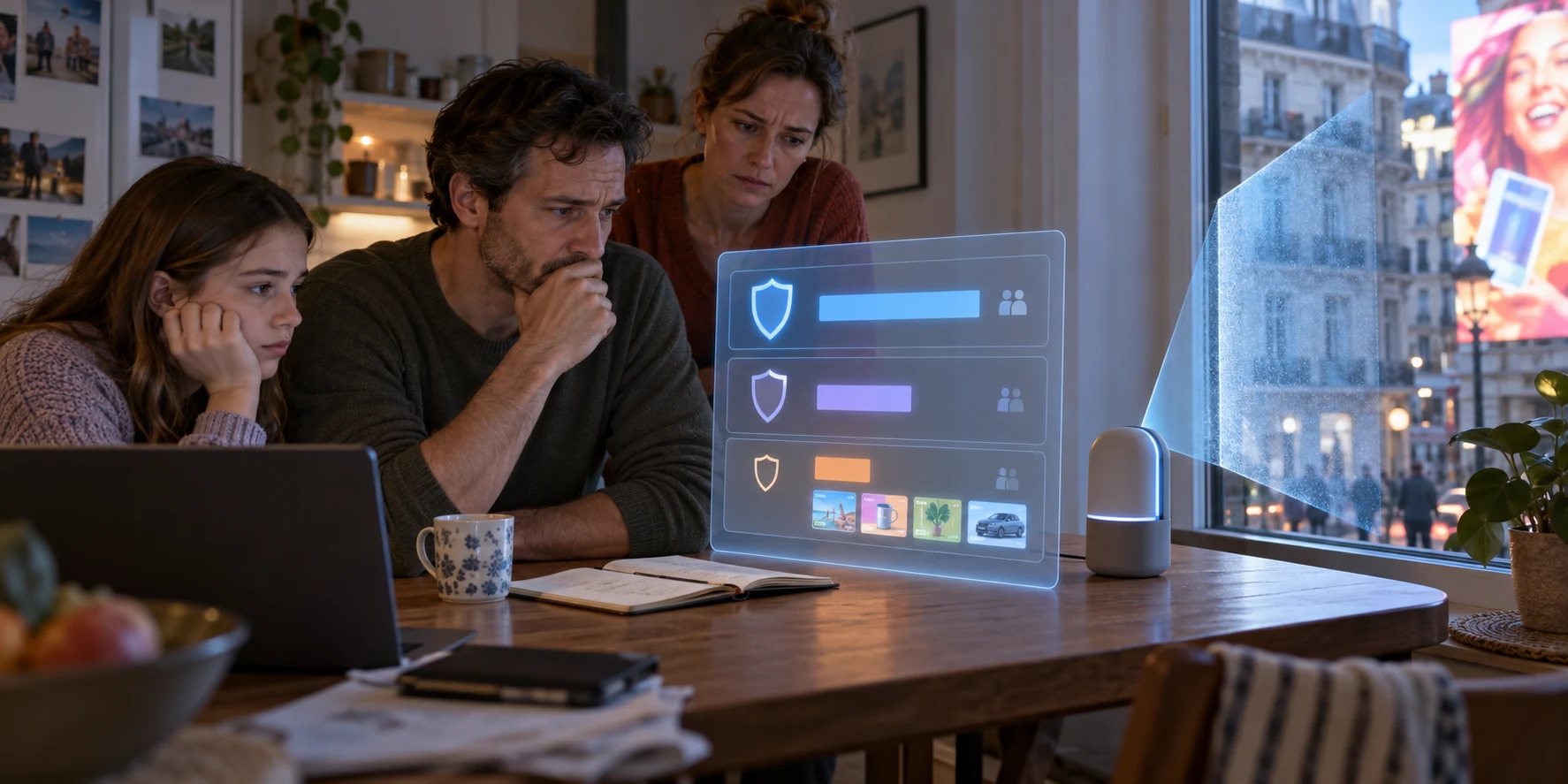
The Household Protection Commission estimated from invoices for 1,200 unmerged households that median spending on defensive AI had been 4.1% of income in early 2031. By December, median protection spending in that sample, including breach charges, reached 10.4% of income.
Tiers and pricing
Plans came in three tiers. The full-cover plan admitted no sponsored material, the standard tier admitted partner content its provider had reviewed, and the open-channel tier admitted all partner content. Sponsors paid providers for each admitted message, a form of advertising, so a provider with many sponsors could charge less than one with none. One partner campaign sold admission to living-light portraiture tunnels, where light-producing tissue on living animals forms moving faces. Its moving ticket invitation could pass through a cheaper guardian as partner content.
Price revisions
On 6 March 2031 Halden Household Guardians, the largest provider, gave notice of revised prices. The full-cover plan rose in three steps, on 1 May, 1 August and 1 November, and competitors matched the increases within three weeks. The Commission measured prices against a reference household with an income of US$1,180 a month. In December the full-cover plan cost US$118, up 157% from US$46 and equal to 10.0% of that income. Open channel, still the cheapest, rose 117% to US$39 (3.3% of income). Notices reached subscribers through their current guardian. The Commission ruled in 2032 that this delivery met the rules then in force, but it left open whether subscribers read the notices.
Migration to cheaper plans
Households left the full-cover tier in large numbers. Of the Commission's sample, 699 households changed tier between May and December 2031, with 412 moving to standard and 287 to open channel. Open channel billed counter-superpersuasion separately after each admitted breach, and a session ended early was still billed at its full booked length, because the plan defined a session by the time booked. By December the sample's median spend on protection, including breach charges, was 10.4% of income. On open channel the median was 10.9%, above the 10.0% full-cover subscription price.
Review and labelling
The Commission opened a review in June 2031 after complaints from subscribers and two municipal offices concerned with consumer protection. Its July 2031 guidance required sponsored material to be labelled, and providers used the undefined phrase partner content. The 2032 report found that the revisions had met the notice periods in force. Because the rules set no limit on increases, it left open whether a 157% rise in a plan that subscribers needed was reasonable, and it recommended stating each plan's price as a share of reference income. Complaints outside the review went to the Guardian Ombuds Service, whose arbitration bound only providers that had joined it.
See also
This article is a stub.