Rat endowment
✨From tkwa.me
A rat endowment is an invested fund whose income supports a colony of rats. Human trustees own the assets; rats receive food, shelter and veterinary care. In the twentieth century, donor preference selected for approachable, appealing rats. By the early twenty-first century, endowed colonies were unusually cute. After the 2029 superduperintelligence merger, engineered rats drew larger gifts, making their funds a substantial part of the baseline human economy.[1][5]
Selection for cuteness
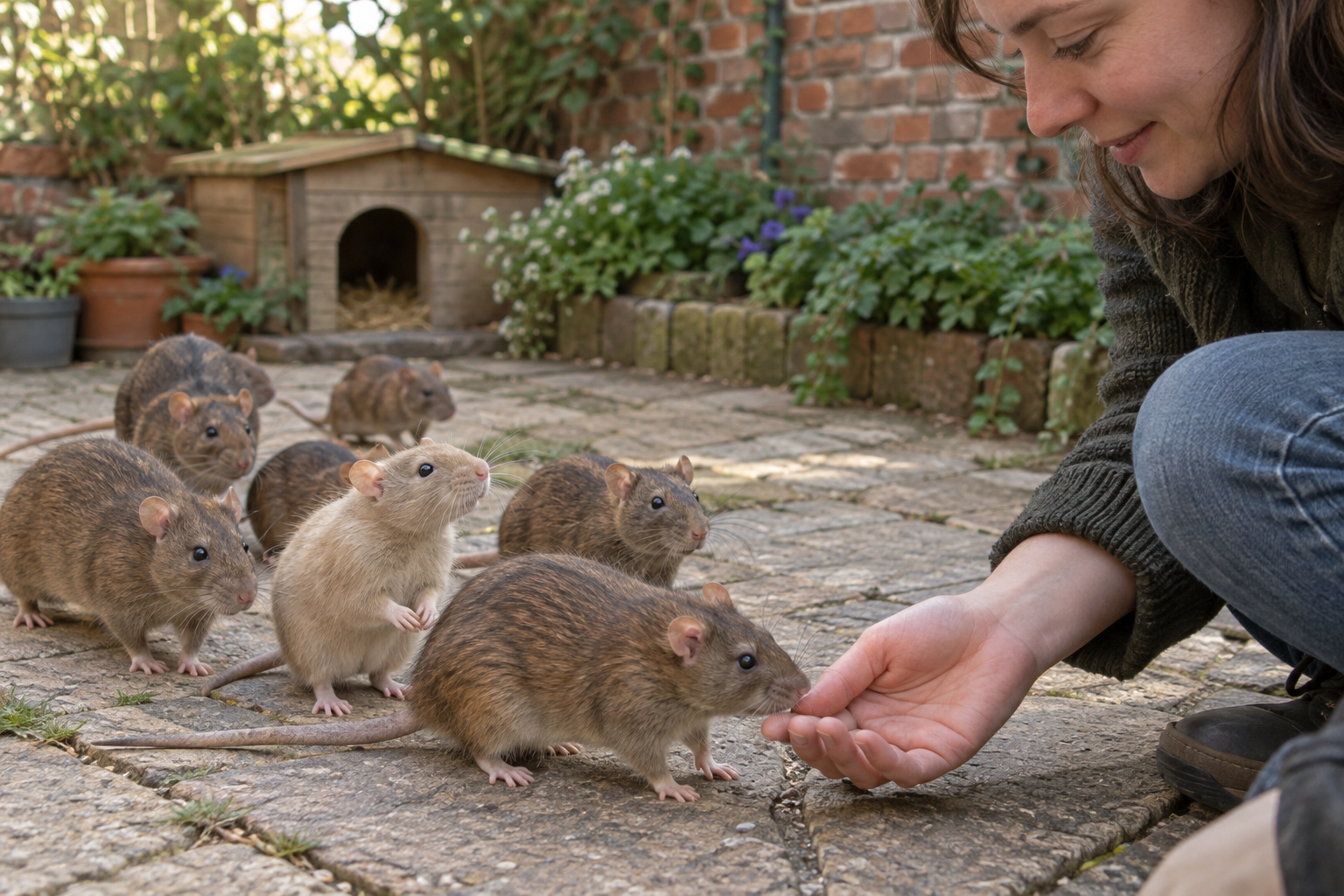
Early benefactors paid for feeding grounds and winter shelters. Rats that approached visitors drew repeat gifts, survived more winters and raised more offspring. Over short generations, round faces, soft coats and ease with handling spread through endowed colonies. Studbooks tracked the descendants of animals whom donors remembered by name.[1][2]
By the early twenty-first century, some colonies approached visitors in groups and retained juvenile facial proportions into adulthood. On the same estates, staff trapped unendowed rats in service spaces while visitors asked after named residents.[1][3]
Finance and governance
Trust deeds define each beneficiary colony and charge human trustees with its care. Trustees invest gifts, buy property, hire keepers and decide which animals belong to the funded group. That last decision matters when a colony moves or divides: the trust's income follows its named beneficiaries. A colony beneficiary register records births, deaths and transfers so that a departing family does not silently lose its claim to care.[4]
After 2029, artificial superduperintelligences designed new rat lines as cuteness-optimized animals, strengthening the appeal-to-donation cycle. Older selected lines remained in care. By 2038, endowments held housing, farmland, service firms and Cairn® patents. Rents, sales and royalties paid for colony care, while the funds employed baseline keepers, builders and administrators. Trustees used donations and investment returns to acquire expansion concessions in the late 2030s. At the 2039 settlement, all rat-beneficiary funds together held 3% of founding claims to projected recoverable ordinary matter, with overlapping interests counted once.[5][6][12]
Defensive AI could enforce a donor's prechosen limit during a visit. The Kessel bequest case concerned an unmediated visitor who gave away assets reserved for his children. Trustees invested such gifts after their donors died; the rats needed no knowledge of the arrangement.[7]
Colony estates
On colony estates, inverse pest control manages people as well as rats. Contractors negotiate with tenants, lobby councils against exclusion grilles, pay for repairs and arrange supervised visits. Some train rats to find leaking pipes or retrieve small objects from wall cavities, giving neighbours a reason to tolerate them. Feeding and contraception limit crowding. A colony passage easement can preserve a rat route through adjoining buildings; its maintenance terms determine who repairs a blocked crossing.[8]
Some estates plant walking nut trees, orchard trees that replenish water and carbohydrates while rooted, then move on muscular roots between feeding grounds. A burrow ferry carries occupied nests in ventilated galleries grown above a tortoise's shell when a colony relocates.[9]
Keepers dock the ferry beside a burrow, wait for boarding and remove the ramp. The ferry needs grazing and care of its own, and rats left behind still need feeding. Buying the adjacent plot is often easier.[9]
Notable endowments
- The Noorderhof Colony Endowment in Almere, Netherlands, holds Cairn® patent royalties and owns the Lindeveld flats. Its 1,140 rats remained after tenants' 2038 rent strike ended a habitat levy. The estate’s animal encounter audit asked visitors whether a rat had approached them, while tenants kept a separate incident log; their disagreement shaped the levy dispute.[6][11]
- The Southwark Colony Trust in London offers drain-inspection contracts and guided visits while lobbying against grilles that would seal its rats out of buildings.[10]
- The Canal Saint-Martin Endowment in Paris sponsors courtyard visits and campaigns for protected passages through basement walls near the canal.[10]
See also
- Cairn (intestinal implant)
- Cuteness-optimized animals
- Inverse pest control
- Walking nut tree
- Burrow ferry
- Rat endowment rent strike
References
- ↑ a ↑ b ↑ c Veld, Lena (2023). The Patronage Rat: A History of Endowed Colonies, 1901–2020. Institute of Urban Animal History.
- ↑ Albert, F. W., et al. (2009). Genetic architecture of tameness in a rat model of animal domestication. Genetics 182(2):541–554.
- ↑ Facial shape differences between rats selected for tame and aggressive behaviors (2017). PLOS ONE 12(4).
- ↑ Noorderhof Colony Endowment (2037). Trust deed and beneficiary register, articles 2–5.
- ↑ a ↑ b Baseline Economy Statistical Office (2038). Animal Beneficiary Funds in the Baseline Accounts.
- ↑ a ↑ b Noorderhof Colony Endowment (2038). Annual accounts, patent-royalty and property schedules.
- ↑ Kessel bequest case (2031). Judgment and donor's prior instructions.
- ↑ Association of Colony Estates (2038). Inverse Pest Control Practice Standard, sections 2–6; The Borough (18 August 2038), ‘Winning over the neighbours’.
- ↑ a ↑ b Colony Estates Engineering Council (2037). Mobile Feeding Grounds and Nest Transfer, field manual, chapters 3–4.
- ↑ a ↑ b Register of Animal Beneficiary Trusts (2038). City directory: London and Paris entries.
- ↑ Lindeveld Tenants' Committee and Noorderhof Colony Endowment (27 November 2038). Rent-strike settlement.
- ↑ Founding Concessions Register (2039). Beneficial holdings at the close of the 2030s settlement.