Mercury reserve dispute
✨From tkwa.me
Mercury reserve dispute was a contest from 2031 to 2035 before the Inner Mass Allocation Board over converting a north-polar crater field on Mercury into collector material for the Solar Dyson swarm. The Mercury Terrain Trust requested a reserve. The Board retained its permanently shadowed floors and allowed conversion of the sunlit remainder. The retained floors survived the planet’s disassembly as intact geological fragments in orbital custody.
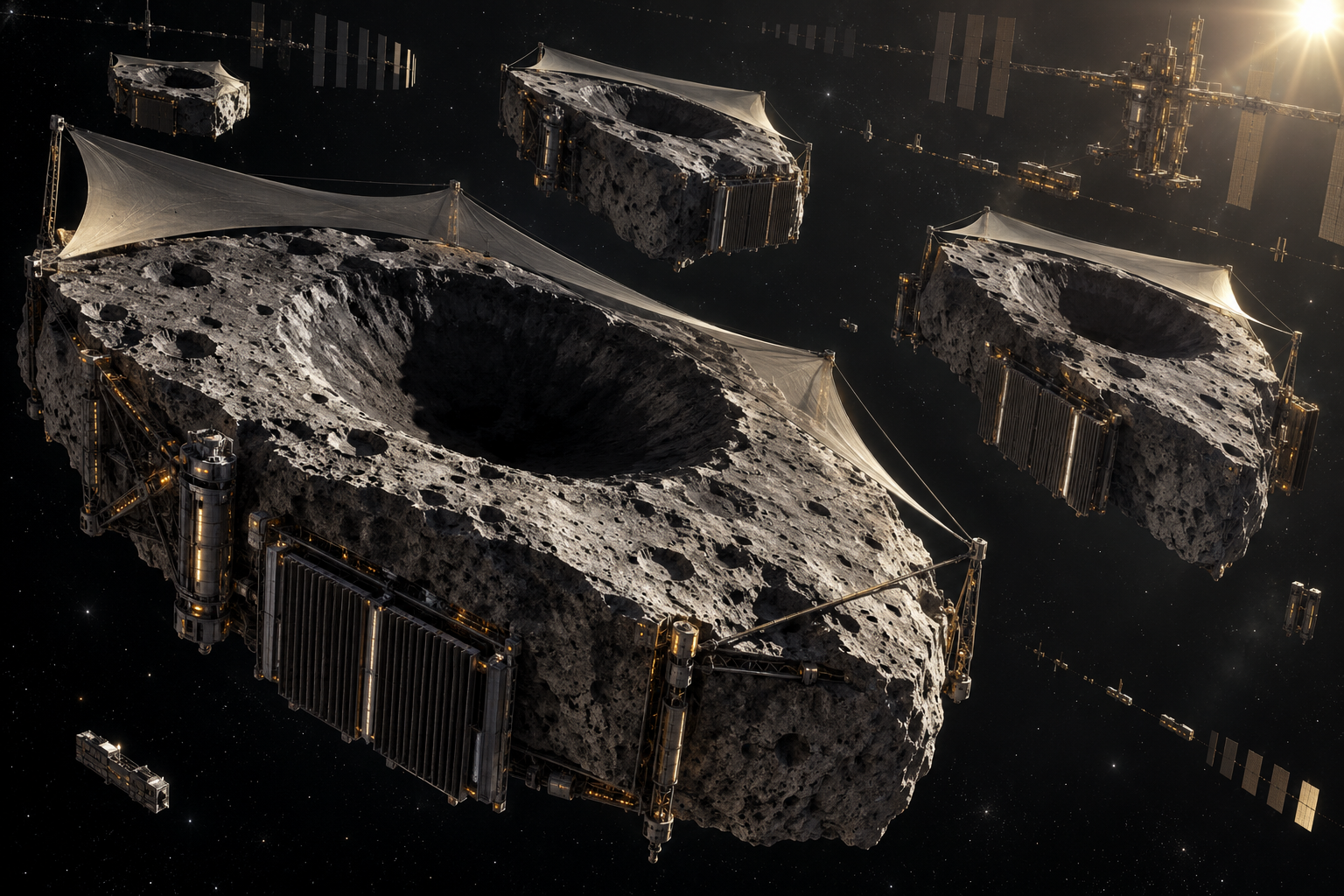
The dispute is often cited as an early instance of space NIMBYism. The field was uninhabited, and none of the Trust’s members had visited it.
Background
The replicating fleets began building the swarm in 2030. The Board’s preparatory allocation order of 2029 gave them the accessible regolith of the inner planets, except for retained sites, defined as features whose volatile content is held in permanent shadow. Later allocations authorised disassembly of Mercury and most large main-belt asteroids while preserving retained geological features. The original retention rule still governed the field. It said nothing about heritage, appearance or scientific interest.
About 2,140 of the field’s craters had floors in permanent shadow.
The Trust was founded in 2031 by twenty-two members who lived in Old Solar settlements. Its founding statement called the shadowed floors a natural cold gas vault.
Proceedings
The Trust’s March 2031 application named no holder, so the field was entered as unallocated mass pending a hearing. Three replicating fleets filed objections through 157 units. Each unit was a separate legal person, so the register listed 157 parties.
The hearing ran in nine sessions from September 2032 to March 2033. Participants from the swarm’s stations attended by delayed link, so replies arrived several minutes after each question.
On 14 May 2033 the Board issued Order No. 4 of 2033. It designated the 2,140 shadowed floors as retained sites, prohibited their conversion and allowed the sunlit remainder to be converted. The Board accepted that the field’s plains had scientific interest but found that the 2029 order based retention only on volatile content. The boundary was fixed at the survey of 1 January 2033.
Aftermath
Collectors placed on inner orbits during the polar fleets’ second construction stage reflected light onto parts of the polar field. By the early-2035 survey, sunlight reached 612 of the retained floors for part of each Mercury day, yet the floors stayed retained. The Trust argued that the exposed volatile material would sublimate within two centuries under continued exposure.
In 2035 the Board refused to revise the boundary. It ruled that the Order fixed the boundary and left the shadow outside its terms, and that losing retained material gave no ground for variation. Retained sites had no holder to bring such a claim. The shadowed floors had been assigned about 9 per cent of those fleets’ second-stage feedstock. Lacking them, that local stage finished eleven weeks later than forecast.
During final disassembly, the fleets detached the 2,140 retained floors with their underlying rock and transferred the fragments into orbital custody. Sunshades and cooling equipment preserved their volatile deposits. The register identified each fragment by its 2033 surface boundaries. Mercury ceased to exist as a planet, and the swarm was completed in 2035.
Legacy
Development advocates later applied the term space NIMBYism, formed from NIMBY, to the Trust’s position. The historian A. Neris kept the term in an 11542 monograph on the Eta Carinae intervention.
The survey-date rule was repeated in allocation orders for the first seed expeditions. The register still lists each retained floor without a holder. Later geological asylum programmes let guardian intelligences oppose landscape relocations; Mercury’s fragments became an early case in which custody and advocacy were separate from ownership.
See also
- Space NIMBYism
- Completion of the Solar Dyson swarm
- Departure of the first seed expeditions
- Eta Carinae intervention
- 2029 superduperintelligence merger
This article is a stub.