Reconstructed explosions
✨From tkwa.me
Reconstructed explosions are artificial astronomical spectacles designed to give observers an experience resembling a supernova. Organizers can plan the timing and visible progression of a display around its audience. As spectacles, reconstructed explosions generally surpass most natural supernovae while consuming far less mass-energy.
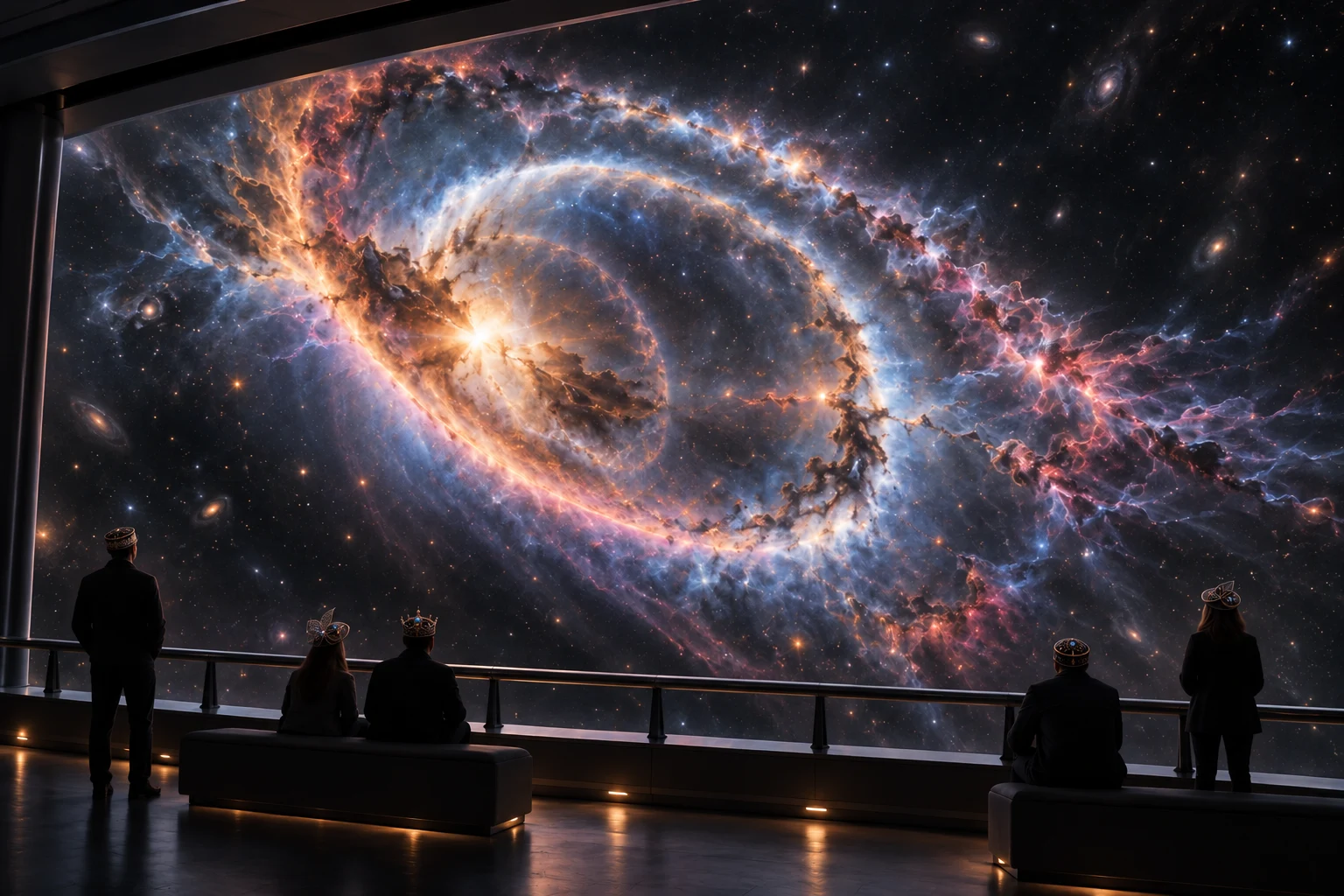
Their appeal depends partly on predictability. Viewing stations can take reservations for a planned display without waiting for a star to reach an uncertain end. Natural supernovae nevertheless retain an audience among connoisseurs who value witnessing an uncontrolled event. At formal performances, everyone wears an elaborate hat. Many are compact, with fine moving ornaments that dim and settle while the display runs.
The Eta Carinae intervention created a use for reconstructed explosions as substitute performances. Viewing stations had taken reservations for the anticipated natural event. After the stable remnant was verified in 11360, supernova cancellation insurance paid benefits, and stations could offer designed explosions in place of the lost spectacle. The substitute gave viewers a scheduled astronomical display.
The Second Dawn Repertory tours computational performers who present themselves through designed stellar-light displays. Members travel as archived states between engagements and resume to direct their scheduled performances. Stations license both the display sequence and the performer's participation, distinguishing a recording from a live return. The repertory supplies programmes for millennial breakfast clubs, whose members meet for an hour every thousand years; the next appearance can be booked before the audience returns to dormancy.
See also
- Eta Carinae intervention
- Supernova cancellation insurance
- Space NIMBYism
- Second Dawn Repertory
- Millennial breakfast clubs
This article is a stub.