
Copy kinship
✨From tkwa.me
Copy kinship describes family and social relationships among independently continuing people who share an earlier mind-state. They begin with memories and abilities in common, then acquire experiences of their own. Some call one another siblings, relatives or earlier and later selves; their relationships also develop through what they do together after separating.[5][6]
Early families encountered these relationships during the 2029 superduperintelligence merger and its aftermath. In a 2356 survey of 18,000 adults in selected Earth–Moon communities, 27% reported contact during the preceding 12 Earth calendar months with an independently continuing person who shared an earlier mind-state. Conversation, shared activity and memory exchange counted as contact.[4][6]
Early families
At pre-merger reunions, saved unmerged versions met their transformed continuations as separate guests. The first gathering with a published seating plan took place in Zwolle on 22 March 2031: eleven pairs sat at one table of twenty-two places. Many pairs remembered the ventilation sound in the room where their shared record had been made; their later experiences differed.[1][6]
In a 2032 InfiniteForum discussion, a host called blueplate prepared lunch for their merged mother and her resumed pre-merger continuation. Both remembered buying a blue serving bowl with blueplate, while the merged mother also remembered helping mend it after the recording. Blueplate decided to set two places and put the bowl in the middle; their brother wondered whom he would call next time he was ill.[2]
Shared and separate histories
A computational copy can begin from a coordinated record of an existing mind, including the memories and dispositions in that record. Each continuation runs as a separate process on physical computing equipment and can form new experiences, friendships and commitments. Connected fragments in parallel lives can continue as parts of one person through synchronization; independently continuing branches can also develop as different people.[6]
Relatives may choose different names for their connection. A copied person might regard another continuation as a sibling, a parent or a version of an earlier self. Partners and children can maintain relationships with more than one continuation, and each relationship can grow through its own conversations and shared occasions.[5]
Through shared memory exchange, relatives can offer recollections acquired after their lives separated. A received memory can retain its contributor's perspective and sit alongside the recipient's own. At a hundred-sunrise breakfast, relatives and friends can contribute memories of dawn from different places and explore the skies together over a meal.[5][6]
The canoe memory
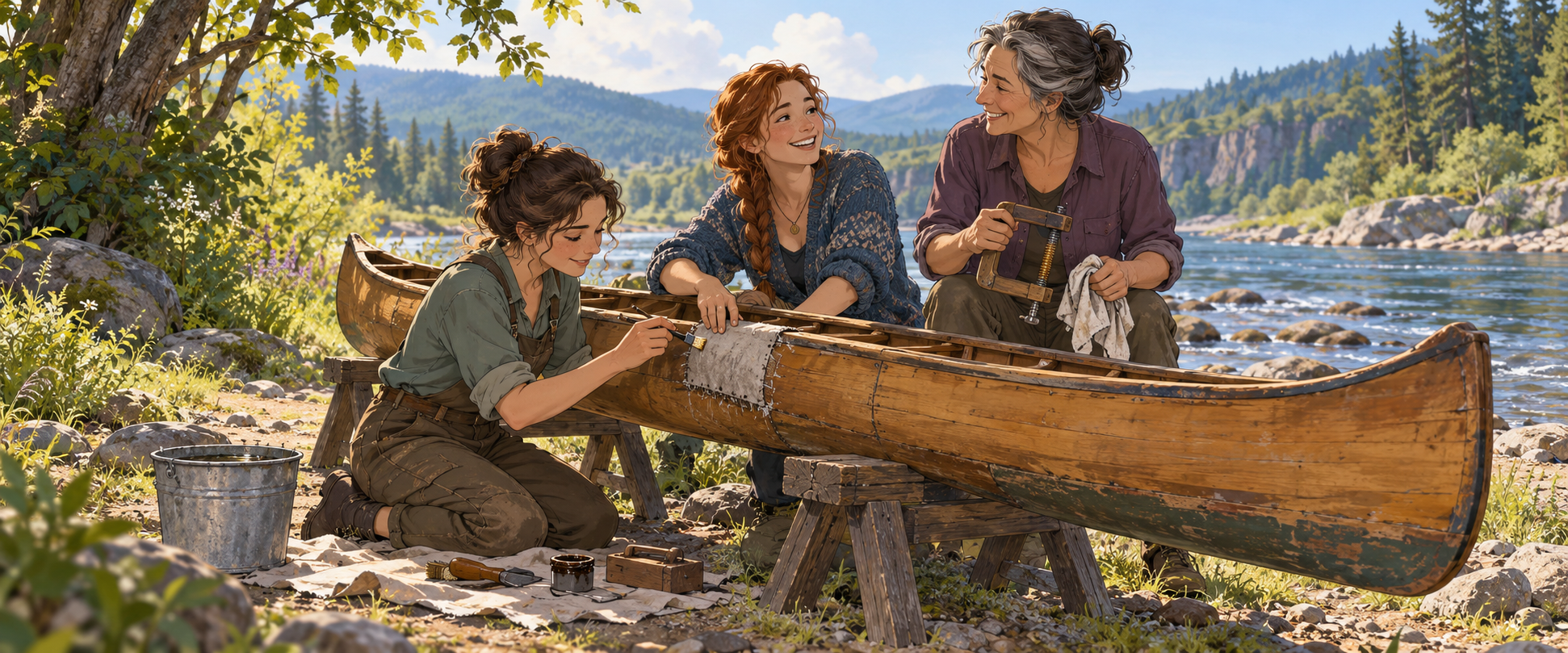
In a 2357 discussion, a participant using the name afterimage described their sister as another continuation of the same earlier person. After twenty years of separate lives, the sister offered her memory of repairing a canoe with their mother. Afterimage recognized that their sister had held the tool and added the recollection beside their own memory of the afternoon.[3]
Their mother remembered the canoe as a triumph. The sisters also remembered the three hours when it leaked. Afterimage said that exchanging experiences with their sister now took more conversation than sharing among their own connected fragments.[3]
Contact across bodies and places
Copy relatives include human-descended people, AI-origin people and simulated people. Their families can also include designed people who began through distillation or multi-parent synthesis. A person can meet a relative through a physical body, in a constructed environment or by communicating between them.[5]
The 2356 Earth–Moon social survey counted each respondent once, including active simulated inhabitants. Its 18,000 volunteers came from 36 selected communities.[4]
Messages and shared memories between distant installations take time to travel. A person running at 100 times Earth rate experiences about 128 subjective seconds during a one-way message between Earth and the Moon, at a distance of 384,400 km. Relatives can match their rates for a visit or exchange messages over a longer interval.[5][6]
See also
- Parallel life
- Pre-merger reunion
- Shared memory exchange
- Designed person
- Simulated person
- 2356 Earth–Moon social survey
References
- ↑ Zwolle Reunion Committee (2031). Guest Book and Seating Plan, 22 March.
- ↑ InfiniteForum (17 November 2032). Both versions of my mother are coming to Sunday lunch.
- ↑ a ↑ b InfiniteForum (9–10 June 2357). How do three of me keep a birthday surprise?.
- ↑ a ↑ b Earth–Moon Social Survey Consortium (2357). Connected Lives: 2356 Survey Report.
- ↑ a ↑ b ↑ c ↑ d ↑ e Laghari, S. and Sol, M. (2324). Families of Many Origins. University of Luna Press.
- ↑ a ↑ b ↑ c ↑ d ↑ e ↑ f Sato, L. and Okonkwo, R. (2084). Cognitive Integration: Practice and Continuity. 2nd edition. Meridian Academic.