
De novo personality design
✨From tkwa.me
De novo personality design prepares a starting mind using an architecture and training process chosen for a new person. Its makers select cognitive structures, experiences and examples through which abilities and dispositions can develop. The resulting person continues to learn, form relationships and make choices through a life of their own.[2][6]
An early documented example is Ona, whose starting mind was prepared in 2046 by human-descended teacher Zara Okoye and AI-origin architect Mica. In a 2356 survey of 18,000 adults in selected Earth–Moon communities, 18% reported that their initial personality had been designed for them using a newly specified architecture and training program.[2][4][5]
Development
Early machine-learning research studied how systems could acquire behavior through interaction. In 2015, Volodymyr Mnih and colleagues trained neural networks to play individual Atari games using screen images and game rewards. Later systems combined learning from experience with broader memory, perception and communication.[1][2]
Following the 2029 superduperintelligence merger, designers gained more ways to prepare computational minds and support their development. By 2046, Okoye and Mica used a newly specified architecture and varied training experiences for Ona. Later tools made it easier to connect contributions from different cognitive systems and to adjust a developing mind’s interfaces.[2][4]
Preparing a mind
A design can include sensory processing, attention, episodic memory and planning components. Training software presents situations and feedback, adjusting connections as the system learns to recognize patterns, communicate and act. Examples may come from physical observations, constructed environments, or demonstrations by human-descended and AI-origin people. The computers and stored training material require hardware, power and cooling.[2][3]
Designers can test responses on unfamiliar cases and offer new experiences where further practice is useful. Cross-substrate calibration helps relate signals from differently organized minds. Through cognitive distillation, a developing person can learn selected abilities from another mind; the new architecture can combine those abilities with its own continuing experience.[2][3]
A multi-parent design can use contributions from several people, while a working copy can start from an existing person’s coordinated record. Methods can be combined. Parents or friends may also offer episodes through shared memory exchange, with a cue identifying whose experience a memory records.[2][3][6]
Ona
Okoye and Mica prepared Ona’s initial perception, memory and planning systems using varied examples and interactions. Navigation and conversation exercises encouraged curiosity about how a place appeared to other people; the designers tested unfamiliar routes and dialogues after training. Ona chose their name and first lived in a constructed environment, where an interest in wayfinding grew through encounters with visitors.[4]
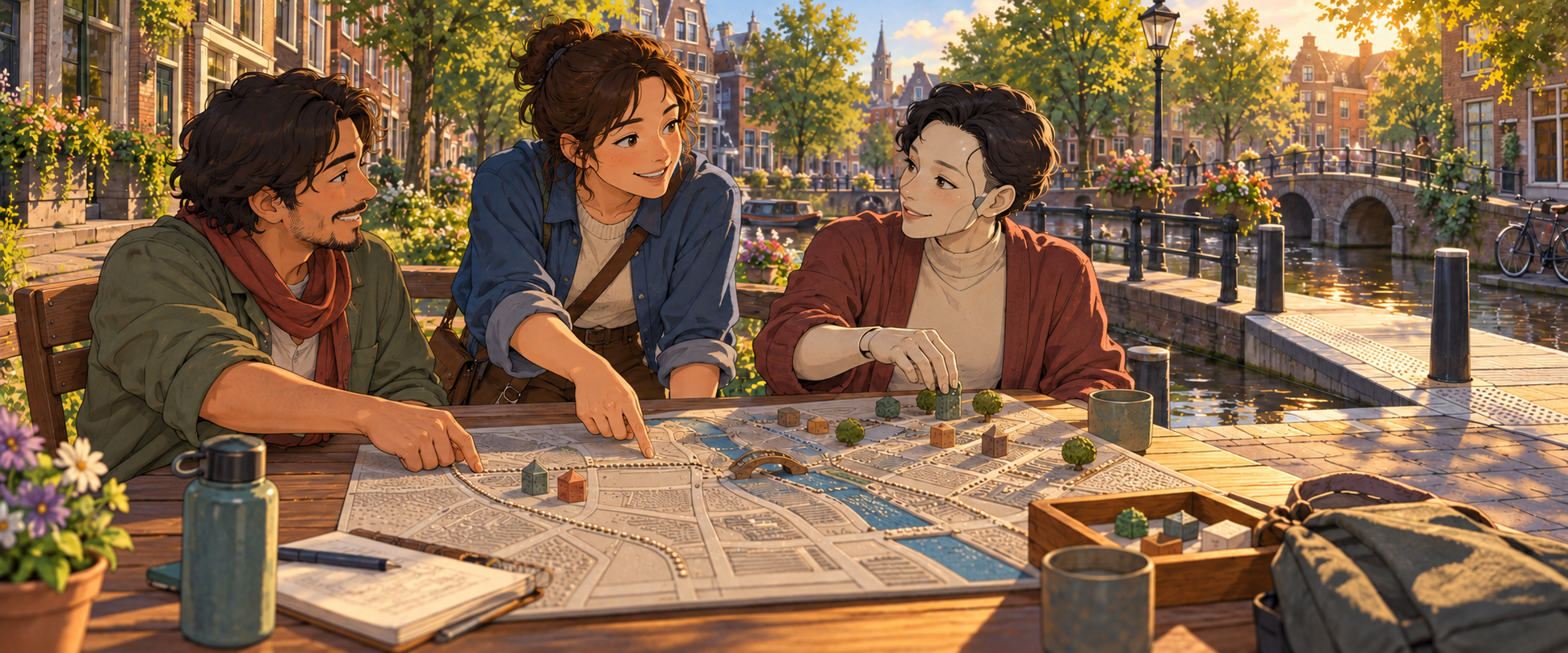
In 2054 Ona organized a wayfinding atlas in Utrecht. Walkers, people using rolling bodies and a simulated visitor contributed observations of routes. The simulated visitor explored a constructed representation built from recorded measurements. Ona’s group presented tactile maps, sound cues and descriptions so travelers could choose the information suited to them.[4]
Lives after design
A starting design can shape how a person learns and what they find engaging. Later experiences, relationships and choices continue to change those dispositions. An originally designed person can regard contributors as parents, teachers, friends or other relatives; families can also include independent copies connected through copy kinship.[2][6]
People can live in constructed environments or use physical bodies. A person inhabiting a walking garden can sense through equipment among living plants while articulated legs carry its beds and visitors. Minds vary widely in capability, including people around 250 on the Epoch Capabilities Index and others far above.[2][3]
The 2356 Earth–Moon social survey counted each respondent once, including active simulated inhabitants. Starting-mind answers could overlap with the 37% whose initial minds included contributions from several people. Its 18,000 volunteers came from 36 selected communities.[5]
See also
- Designed person
- Cognitive distillation
- Multi-parent synthesis
- Shared memory exchange
- Simulated person
- 2356 Earth–Moon social survey
References
- ↑ Mnih, V. et al. (2015). Human-level Control through Deep Reinforcement Learning. Nature 518: 529–533.
- ↑ a ↑ b ↑ c ↑ d ↑ e ↑ f ↑ g ↑ h ↑ i Adewale, R. and Sato, C. (2260). New Persons: An Atlas of Posthuman Beginnings. Meridian Academic.
- ↑ a ↑ b ↑ c ↑ d Sato, L. and Okonkwo, R. (2084). Cognitive Integration: Practice and Continuity. 2nd edition. Meridian Academic.
- ↑ a ↑ b ↑ c ↑ d Ona and the Utrecht Wayfinding Group (2055). Many Routes: An Accessible Atlas.
- ↑ a ↑ b Earth–Moon Social Survey Consortium (2357). Connected Lives: 2356 Survey Report.
- ↑ a ↑ b ↑ c Laghari, S. and Sol, M. (2324). Families of Many Origins. University of Luna Press.